Most people who buy a domain and set up hosting don’t think much about who owns the companies behind those services. You pick a registrar, you pick a host, you get on with it. But a quiet series of deals over the past few years has put a surprising amount of web infrastructure under the same roof.
That roof belongs to CVC Capital Partners, a European private equity firm. And the picture is worth understanding.
What CVC Now Controls
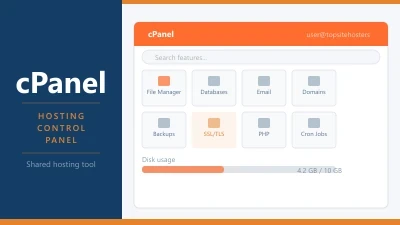
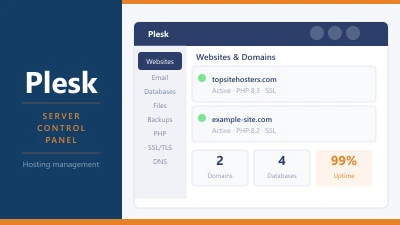
Start with the software layer. CVC owns WebPros, the parent company of cPanel, Plesk, and WHMCS. If you’ve ever logged into a web hosting account, there’s a reasonable chance cPanel was the interface you used. Plesk is the alternative favoured by Windows-based and European hosts. WHMCS is the billing and client management platform that the majority of hosting companies use to issue invoices, manage support tickets, and process renewals.
Between them, WebPros’ products touch an enormous share of the hosting industry’s back office. The company claims its tools support over 80 million domains and 30 million hosting accounts worldwide.
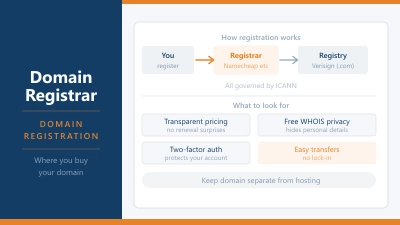
Then in September 2025, CVC acquired a majority stake in Namecheap, one of the largest independent domain registrars in the world, at a valuation of $1.5 billion. Namecheap had around $398 million in revenue in 2024, growing 18% year on year.
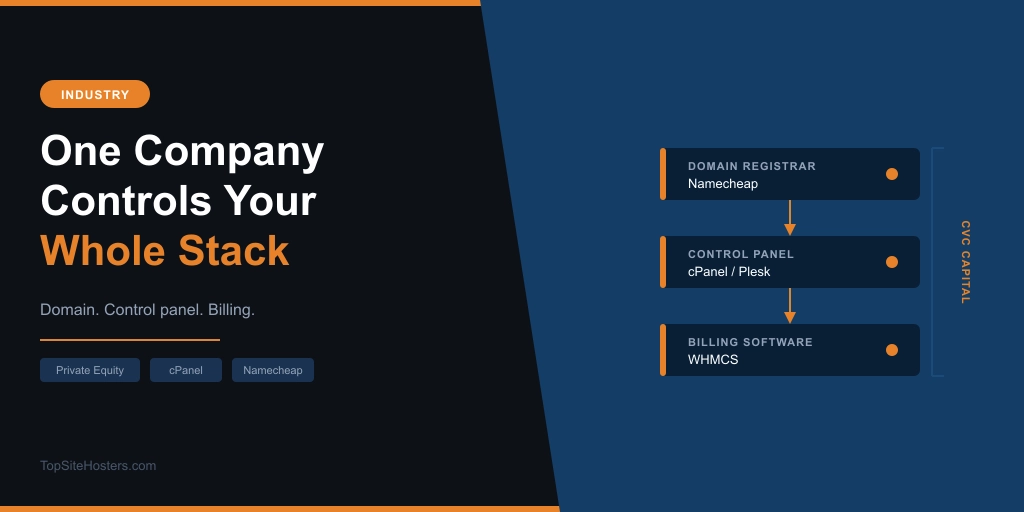
So CVC now has a meaningful position in three distinct parts of what it takes to run a website:
- The domain registrar where you register your address
- The control panel where you manage your hosting account
- The billing software your host uses to charge you
That’s a notable concentration, even by the standards of an industry that’s been consolidating rapidly.
Why This Matters for Website Owners
If you’re a small business owner or blogger, the most direct concern is pricing. cPanel has raised its licensing fees every year since 2019, and those increases get passed on to you through higher hosting bills. The Pro tier jumped nearly 17% in a single year for the 2026 pricing round. Plesk followed a similar trajectory after WebPros brought it under the same ownership.
Now add Namecheap to that picture. The registrar has been popular precisely because it offered transparent domain pricing and stayed independent while competitors around it got absorbed by larger groups. Whether that positioning holds under private equity ownership is something the community is watching closely. The founder, Richard Kirkendall, who had steered the company for 25 years, stepped down three months after the CVC deal closed.
That’s not a verdict on what comes next. New leadership doesn’t always mean service changes. But it’s worth knowing.
Why This Matters for Hosting Businesses
If you run a hosting company, the picture is more pointed. Your billing system, your control panel, and potentially the registrar you use to sell domains to customers could all be generating revenue for the same private equity firm. That creates a dependency that’s hard to unwind quickly.
The leverage it creates is subtle but real. WebPros has already demonstrated willingness to use its position: smaller cPanel resellers lost their previous discount tier in the 2026 pricing round, while large partners saw discounts increase. The economics of running a small or mid-size hosting business on cPanel have worsened meaningfully over six years.
Hosting companies have responded in different ways. Some have migrated to DirectAdmin, which sits outside the WebPros portfolio. Others have moved to open source alternatives like CyberPanel. None of those migrations are frictionless, particularly if your customers are used to cPanel’s interface.
The Broader Pattern
CVC is not an outlier here. The hosting industry has been consolidating steadily for years, and private equity has been the main driver. Permira paid $7.2 billion for Squarespace. Clearlake and Siris Capital combined Bluehost, HostGator, and a dozen other brands into Newfold Digital. The H1 2026 period alone saw around 30 significant deals across hosting, domains, and adjacent infrastructure.
What makes CVC’s position unusual is the vertical spread. Most acquirers buy competitors or adjacent brands in the same layer of the stack. CVC has assembled stakes across multiple layers: the domain layer, the control panel layer, and the billing layer. That’s a different kind of influence from simply owning several hosting brands.
There’s also a compounding effect worth noting. WebPros already owns cPanel and Plesk, which means cPanel’s main competitor is owned by the same company. Adding Namecheap to the portfolio brings in a registrar at the top of the funnel. If a customer registers a domain with Namecheap, buys hosting from a provider running cPanel, and that provider bills them through WHMCS, the infrastructure behind all three touchpoints could eventually route back to the same balance sheet.
What to Do With This Information
None of this means you need to switch registrars tomorrow or pressure your host to abandon cPanel. For most website owners, the practical impact right now is limited. Namecheap’s domain pricing and service quality haven’t materially changed since the acquisition. cPanel is still the most widely supported control panel, and WHMCS is still the industry standard for hosting billing.
The reason to pay attention is the trajectory, not the current state. Private equity acquisitions in hosting tend to follow a pattern: stability for a year or two, then gradual changes to pricing or terms as the new owners look for returns on their investment. It’s happened enough times across the industry to be worth tracking. That pattern isn’t guaranteed, but it’s happened enough times to be worth keeping in mind when you’re making long-term decisions about where to register a domain or which host to build your business on.
The short version: the web infrastructure market is more concentrated than it looks from the outside. It’s worth knowing who’s actually running the services you depend on.
Frequently Asked Questions
Does CVC owning Namecheap and WebPros affect my hosting directly?
Not immediately. If you’re already using Namecheap for domains or a host running cPanel, nothing changes today. The concern is longer-term pricing and independence, based on the track record of private equity ownership in this industry.
What is WebPros?
WebPros is the parent company of cPanel, Plesk, and WHMCS. It was acquired by CVC Capital Partners and operates as a portfolio company. Its software underpins a large share of the web hosting industry globally, handling control panels and billing systems for thousands of hosting providers.
Are there alternatives to cPanel and WHMCS that aren’t owned by CVC?
Yes. DirectAdmin is the most established independent alternative to cPanel for shared hosting management. CyberPanel is a free option built on OpenLiteSpeed. For billing, alternatives to WHMCS include Blesta and HostBill. None are as widely supported as cPanel or WHMCS, but they’re growing as providers look to reduce dependency on WebPros.
Did Namecheap’s founder leave after the CVC acquisition?
Yes. Richard Kirkendall, who founded Namecheap around 25 years ago and had remained CEO, stepped down approximately three months after CVC completed its majority stake acquisition in September 2025. He was replaced by Hillan Klein.