
Best Eco-Friendly Web Hosting in 2026
The best eco-friendly hosting providers, ranked by real green credentials. All Green Web Foundation verified.
Some hosts run their data centres directly on hydropower or wind energy. Others purchase certificates that fund renewables elsewhere. A few just plant trees and call it done. These approaches are not equal, and the right host for you depends on how much the distinction matters. We’ve covered the full breakdown in our green hosting guide, including how to spot greenwashing and what the Green Web Foundation’s 2026 policy changes mean for carbon offset claims. This page is the shortlist: the providers we’ve reviewed and verified that are worth choosing.
All eight picks are listed in the Green Web Foundation’s verified directory.
At a Glance
The table below shows each provider’s green tier, approach, and verified starting price. Tier 1 means direct renewable energy physically powering the data centres. Tier 2 means 100% renewable energy matching via certificates or direct contracts with renewable suppliers.
Hetzner
Direct hydropower in Germany, wind and hydro in Finland. Named suppliers, audited sources, and no marketing fluff. One of the cleanest options on this list.
Best for European usersKrystal
100% renewable electricity from Ecotricity with a PUE of 1.05. One of the most energy-efficient data centres of any commercial host, based in the UK.
Best for UK usersIONOS
Wind power in the US, 100% renewables across EU data centres. Tier 1 credentials at the lowest starting price on this page.
Best value Tier 1GreenGeeks
300% renewable energy certificates through the Bonneville Environmental Foundation. EPA Green Power Partner since 2009 and the most visible green brand in hosting.
Best for green brand identityHostinger
Went from 35% to 100% renewable matched between 2022 and 2024. Publishes audited GRI sustainability reports with real emissions data. Strong credentials at a budget price.
Best budget pick with audited reportingSiteGround
Runs on Google Cloud infrastructure, which matches 100% of its energy with renewables. LEED Gold certified headquarters and energy-efficient PHP reduce consumption further.
Best for WordPress on green cloudInMotion
Operates one of the first purpose-built green data centres in the US. Energy-efficient cooling systems have reduced carbon output by over 2,000 tonnes per year since 2010.
Best for US-based green hostingKinsta
Google Cloud plus Cloudflare’s ARM-based edge network. 100% renewable matched infrastructure with efficient hardware reducing energy per request.
Best managed WordPress pick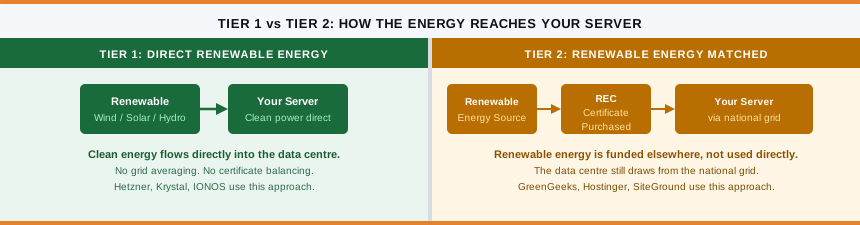
Tier 1: Hosts Running on Direct Renewable Energy
These three providers don’t offset their energy use on paper. The electricity physically powering their servers comes from verified clean sources, with named energy suppliers you can look up independently. If your goal is the lowest possible carbon footprint from your hosting, start here.
What separates Tier 1 from Tier 2 isn’t commitment. It’s the mechanics. A Tier 1 host has arranged for the actual electrons flowing into their data centre to come from a renewable source. There’s no grid averaging, no certificate balancing. The servers run on clean power directly.
Hetzner: Best for European Users Who Want No Compromises
Hetzner doesn’t trade on being green. There’s no leaf icon on their homepage and no dedicated sustainability marketing page. They just run their infrastructure on clean energy and get on with it, which is arguably more credible than a provider whose entire brand identity depends on the green label.
Their German data centres use hydropower supplied by Energiedienst AG, a certified renewable energy provider operating along the Rhine. Their Finnish facilities run on a mix of wind and hydropower from Oomi Oy. Both are named, verifiable suppliers with auditable supply chains. You’re not taking their word for it. Hetzner has been listed in the Green Web Foundation’s verified directory for years and the credentials hold up to scrutiny.
From a web hosting quality standpoint, Hetzner delivers reliable performance at a price point well below most of their competitors on this list. Their infrastructure is modern, their network is fast, and their data centre locations inside the EU are useful for any site with a European audience and GDPR considerations. If you’re running a business that needs to demonstrate data sovereignty as well as environmental responsibility, Hetzner ticks both boxes in one place.
The main honest limitation is the control panel. Hetzner’s interface is built for people comfortable with server management. It’s not designed to hand-hold a first time site owner through setup. If you’re a developer, a small agency, or someone who’s moved a site before, it’s straightforward. If this is your first hosting account and you want something that walks you through it, one of the shared hosting options lower on this page will serve you better.
Krystal: Best for UK Users, and the Best Efficiency Score on This List
Krystal is a UK based host that powers all its data centres with 100% renewable electricity sourced from Ecotricity, one of the UK’s dedicated green energy suppliers. That makes it Tier 1 by default, but the detail that really stands out is their PUE figure.
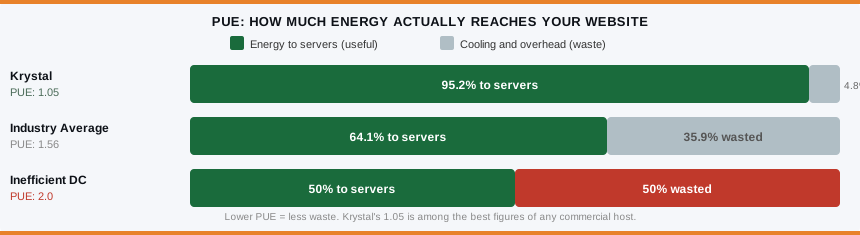
PUE stands for Power Usage Effectiveness. It measures how efficiently a data centre converts incoming electricity into useful computing power. A score of 1.0 would mean every watt entering the building goes directly to the servers: theoretically perfect, practically unachievable. The global industry average sits around 1.56, which means roughly a third of all energy consumed by a typical data centre goes to cooling, lighting, and overhead rather than actual computing. Krystal’s flagship data centre runs at a PUE of 1.05. That’s not just good. It’s among the lowest figures of any commercial hosting provider operating at scale.
In practical terms, a PUE of 1.05 means Krystal wastes almost nothing. Combined with 100% renewable electricity input, the overall carbon footprint per unit of compute is as close to zero as current technology allows. No other host on this page comes close on that specific metric.
Beyond the efficiency figures, Krystal’s sustainability programme is specific and verifiable. They partner with Ecologi to plant trees monthly for every active customer. Their sustainability page names their energy supplier, publishes their PUE data, and avoids the vague language that tends to signal greenwashing. For UK businesses that want to reference their hosting choice in sustainability reporting or on an About page, Krystal gives you concrete, sourced figures to point to rather than marketing claims.
The main practical consideration is geography. Krystal’s data centres are in the UK, which makes them the natural choice for UK based sites. If your audience is primarily in the US or continental Europe, Hetzner or IONOS will serve your visitors faster.
IONOS: Best Value Tier 1 Option, Covering Both the US and Europe
IONOS runs its US data centre on wind power. Across Europe, all facilities use 100% renewable electricity, with local and regional suppliers given priority where available. The approach is more geographically varied than Hetzner’s, reflecting IONOS’s scale as one of the largest hosting providers in the world by number of customers, but the outcome is the same: the servers run on direct renewable energy, not certificates.
One aspect of IONOS’s sustainability approach that doesn’t get enough attention is their use of AI to optimise energy distribution across data centre infrastructure. Rather than provisioning servers for peak load and leaving that capacity running idle at 3am, they use automated load management to reduce energy consumption during quieter periods. It’s the kind of operational efficiency work that doesn’t make headlines but genuinely reduces consumption over time.
IONOS also runs an equipment recycling programme, repurposing server hardware rather than disposing of it when upgrades happen. That addresses the electronic waste side of data centre sustainability, which most hosting providers don’t mention at all.
Where IONOS stands apart on this list is pricing. Entry level plans start lower than almost any other provider here, which means Tier 1 green credentials are available at a genuinely budget price point. For a small business or blogger who wants to make an environmentally responsible hosting choice without stretching their budget, IONOS is hard to argue against. The US and EU coverage also makes it a practical choice for sites that need to serve both audiences.
Tier 2: Fully Renewable Energy Matched
These hosts match 100% of their energy consumption through renewable energy certificates or direct supplier contracts. The data centres themselves may still draw power from a mixed national grid, but for every unit of energy consumed, an equivalent unit of renewable energy is funded and verified.
Tier 2 is a genuine environmental commitment, not a marketing trick. The money flows to renewable infrastructure, the certificates are independently audited, and the Green Web Foundation verifies the claims. The distinction from Tier 1 is a technical one about how energy reaches the building, not a question of whether the host is doing something real.
For most websites, Tier 2 is perfectly sufficient. If your goal is to reduce your digital carbon footprint and make a responsible choice, any host on this section of the page does that. The Tier 1 vs Tier 2 distinction matters most for organisations with specific sustainability reporting requirements or net zero commitments where the source of energy, not just its matching, is scrutinised.
GreenGeeks: Best if the Green Identity Matters as Much as the Credentials
GreenGeeks built its entire business around sustainability, and it’s maintained that commitment consistently since launching in 2008. They purchase renewable energy certificates equal to 300% of their total consumption through the Bonneville Environmental Foundation, a Portland based non profit and Green-e partner. That means for every unit of energy their data centres and staff workstations consume, three units of renewable energy get funded elsewhere. It’s the most aggressive REC commitment in the mainstream hosting market.
The US Environmental Protection Agency has recognised GreenGeeks as a Green Power Partner since 2009, which is an independently verified status rather than a self declared one. They also partner with One Tree Planted to plant a tree for every new hosting account created.
For a small business owner, blogger, or freelancer who wants to point to their hosting choice as part of a broader commitment to sustainability, GreenGeeks gives you the clearest story. The green credentials are central to their identity, consistently maintained, and independently verified. That makes them easy to reference in an About page or ESG communication without having to explain caveats.
The honest note on pricing: introductory rates are competitive, but renewal pricing is notably higher. If you’re planning to stay long term, check the renewal figure before signing up rather than after your first term expires.
Read our full GreenGeeks review
Hostinger: Best for Budget Hosting with Audited, Improving Credentials
Hostinger’s sustainability story is probably the most interesting on this list, because it’s a story of real, measurable, and rapid change rather than a long standing position. In 2022, just 35% of their data centre energy came from renewable sources. By 2024, they had reached 100% across all regions through a combination of direct renewable energy contracts and certificates, with the approach varying by geography depending on what’s available locally.
What makes this credible isn’t the claim. It’s the reporting behind it. Hostinger publishes annual sustainability reports following GRI standards, which means the methodology is consistent and independently verifiable. Their 2024 report includes audited Scope 1 and Scope 2 emissions data broken down by data centre. Scope 2 market based emissions dropped from 1,522 tonnes of CO2 in 2023 to 15 tonnes in 2024. That’s not a rounding error. It’s a documented transformation.
They’ve also built sustainability requirements into their infrastructure contracts going forward. New data centres must operate on 100% renewable electricity as a condition of the agreement. That means the commitment is structural, not just an annual purchasing decision that could be reversed.
For users who want affordable shared hosting with a credible and improving environmental record, Hostinger is a strong choice. The green credentials hold up to scrutiny in a way that many providers at this price point don’t.
Read our full Hostinger review
SiteGround: Best for Sites Already Choosing Google Cloud Infrastructure
SiteGround migrated its entire infrastructure to Google Cloud Platform in 2020. Google matches 100% of its global energy consumption with renewable energy purchases, which means every SiteGround site runs on Google’s renewable matched infrastructure by default. There’s no separate green opt-in or premium tier. It comes as standard.
Beyond the infrastructure, SiteGround’s Sofia headquarters are built to LEED Gold certification standards, covering energy efficiency, water usage, and materials across the building. Their Ultrafast PHP implementation reduces the server resources required per site, which translates directly to lower energy consumption per visitor. Small gains per request add up at scale.
The limitation worth acknowledging: SiteGround’s green credentials are inherited from Google rather than independently developed. SiteGround doesn’t publish a standalone sustainability report with hosting specific emissions data. For a site owner who just wants a green ticked box, that’s fine. For an organisation with specific supply chain sustainability reporting requirements, the lack of provider level transparency may require additional documentation from Google directly.
Read our full SiteGround review
Kinsta: Best for Managed WordPress with Green Credentials Built In
Kinsta runs entirely on Google Cloud Platform with Cloudflare’s global network sitting in front of it. That gives it the same 100% renewable energy matching as SiteGround at the infrastructure layer, with Cloudflare adding a further layer of efficiency. Cloudflare’s edge network uses ARM based servers that consume significantly less power per request than conventional x86 hardware, which reduces the energy cost of serving cached content to visitors.
The combination of Google Cloud’s renewable matching and Cloudflare’s efficient edge infrastructure means Kinsta is probably the greenest option on this list for total request energy, even though the underlying approach is Tier 2. The energy that does get used is used more efficiently.
Kinsta is a premium managed WordPress host with pricing to match. The green credentials are included as standard at every plan level, so you’re not paying extra for the sustainability angle. If you’re already evaluating managed WordPress hosting for performance, support, or developer tooling, Kinsta covers the environmental side without requiring a separate decision.
How to Choose the Right Eco-Friendly Host
The green tier matters, but it’s not the only thing worth checking. Here’s what to look at beyond the headline claims.
Check the Green Web Foundation first. Before reading any host’s marketing, enter their URL into the Green Web Foundation’s directory. It’s free, independent, and takes ten seconds. If a host claims to be green but isn’t listed, that’s a significant red flag. Every provider on this page passes the check.
Look for named suppliers, not vague language. A host that says “we use renewable energy” without naming a supplier or providing a certificate type is giving you nothing verifiable. Hetzner names Energiedienst AG and Oomi Oy. Krystal names Ecotricity. Hostinger cites GRI standard reports with audited figures. That’s the level of specificity worth looking for.
PUE matters more than most people realise. Renewable energy sourcing addresses what power goes in. PUE determines how much of that power actually reaches the servers. A host with a PUE of 1.8 running on renewables is still wasting almost half its energy to cooling. Krystal’s 1.05 is exceptional. Anything under 1.4 is good. If a host doesn’t publish their PUE at all, that’s worth noting.
Carbon offsets alone are no longer enough. As of January 2026, the Green Web Foundation no longer accepts carbon offsets as sufficient evidence for a fossil-free hosting claim. Offsets have a role, but they don’t change what energy source a data centre actually runs on. A host whose only green credential is buying carbon credits doesn’t meet the same standard as one using renewable energy or RECs.
Tier 2 is fine for most use cases. If you’re a small business, blogger, or freelancer making a responsible choice, any host on this page is a genuine step in the right direction. The Tier 1 vs Tier 2 distinction becomes important when sustainability reporting, net zero commitments, or supply chain transparency are part of a formal requirement rather than a personal preference.
Common Questions About Eco-Friendly Hosting
Is eco-friendly hosting more expensive?
Not in most cases. IONOS, Hostinger, and GreenGeeks all start at prices competitive with non-green alternatives. Renewable energy infrastructure costs have fallen significantly over the past decade, and newer, more efficient data centres often reduce operational costs rather than adding to them. The premium end of this list, Kinsta and to a lesser extent SiteGround, reflects the cost of managed WordPress hosting rather than the green component specifically.
Does eco-friendly hosting affect website speed or uptime?
No. Hetzner, SiteGround, and Kinsta consistently deliver strong performance in independent testing. In many cases, green data centres use newer hardware built for efficiency, which performs better rather than worse. The sustainability approach has no bearing on uptime guarantees, response times, or reliability.
What is the Green Web Foundation?
The Green Web Foundation is an independent non profit that maintains a public directory of hosting providers with verified green energy commitments. Any host can apply by submitting supporting evidence. If a provider is listed, their credentials have been reviewed. You can check any website using their Green Web Check tool: enter a URL and it returns whether the site is hosted on verified green infrastructure.
What is PUE and why does it matter?
PUE stands for Power Usage Effectiveness. It measures how much of the electricity entering a data centre reaches the servers versus being lost to cooling, lighting, and overhead. A PUE of 1.0 would be perfect. The global average is around 1.56. Krystal’s 1.05 is exceptional. A low PUE means the host gets more useful computing out of every unit of energy, which matters for both efficiency and emissions regardless of whether the energy source is renewable.
What is the difference between RECs and direct renewable energy?
Renewable Energy Certificates (RECs) allow a host to fund renewable energy production elsewhere while their data centre draws from a standard grid. Direct renewable energy means the data centre’s electricity supply comes from a verified clean source: hydro, wind, or solar. Both approaches fund renewables. Direct energy is stronger because the grid connection itself is clean, not just offset on paper. We call these Tier 1 and Tier 2 on this page to make the distinction visible at a glance.
Which eco-friendly host is best for UK users?
Krystal is the standout option for UK based sites. Direct renewable electricity from Ecotricity, a PUE of 1.05, UK data centres, and transparent sustainability reporting make it the strongest all-round choice for UK users. IONOS has UK infrastructure too and is more affordable if budget is the priority. For managed WordPress, SiteGround and Kinsta both serve UK audiences well via their respective cloud infrastructure.
Is green hosting actually worth it?
The environmental impact of a single website is small. But small multiplied across millions of sites adds up, and data centres collectively account for roughly 2% of global electricity consumption. Choosing a verified green host is a low effort, often zero cost decision that reduces your contribution to that number. Whether it’s “worth it” is a personal call, but on this list it costs nothing extra at the budget end and delivers the same hosting quality regardless.
Final Thoughts
For European users who want the cleanest available option, Hetzner and IONOS are difficult to argue against. Both run on direct renewable energy, both are priced below most of their competitors, and both have track records worth trusting. For UK users specifically, Krystal’s energy efficiency figures are in a different league from anything else on this page.
If budget is the main factor and Tier 2 is sufficient for your needs, Hostinger offers the strongest combination of affordability and credible, audited sustainability reporting. GreenGeeks is the right pick if the green identity itself is part of what you’re communicating, given the visibility of their 300% REC commitment and EPA recognition.
For managed WordPress, SiteGround and Kinsta both handle the green credentials automatically via Google Cloud infrastructure. The choice between them comes down to performance, tooling, and support rather than environmental considerations.
Wherever you land, use the Green Web Foundation’s directory to verify before you commit. It takes ten seconds and removes any doubt about whether a host’s claims hold up.