What Is Carbon Offsetting in Web Hosting?
Carbon offsetting lets hosting providers claim carbon neutrality by funding emission reductions elsewhere.
Carbon offsetting is the practice of compensating for greenhouse gas emissions by funding an equivalent reduction elsewhere, such as reforestation, renewable energy projects, or methane capture programmes.
In web hosting, carbon offsetting allows a provider to claim carbon neutrality without changing the energy source their data centres run on. The data centre still draws power from the grid, but the host funds projects that remove or prevent an equivalent amount of carbon from the atmosphere.
It’s a legitimate environmental practice, but it’s one of the more contested approaches in the green hosting space. Understanding what offsets do and don’t achieve helps you evaluate a host’s environmental claims accurately.
How Carbon Offsetting Works
When a company generates greenhouse gas emissions it can’t immediately eliminate, offsetting provides a way to balance those emissions by funding activities that remove or prevent an equivalent amount elsewhere.
The process works through carbon credits. One carbon credit typically represents one tonne of carbon dioxide either removed from the atmosphere or prevented from being emitted. A company calculates its emissions, purchases the equivalent number of credits from verified projects, and retires those credits so they can’t be claimed again.
Carbon offset projects are certified by independent standards organisations including the Verified Carbon Standard (VCS), Gold Standard, and the American Carbon Registry. These organisations verify that the claimed emissions reductions are real, measurable, and additional, meaning they wouldn’t have happened without the offset funding.
Types of Carbon Offset Projects
Not all offset projects are equal. The type of project and the certification standard behind it affects how credible the claimed reduction is.
| Project Type | How It Works | Reliability |
|---|---|---|
| Reforestation | Planting trees to absorb CO2 over time | Variable — depends on long-term protection guarantees |
| Renewable energy | Funding solar, wind, or hydro in underserved regions | Generally reliable; prevents future fossil fuel use |
| Methane capture | Collecting methane from landfills or agriculture | High impact; methane is far more potent than CO2 |
| Forest management | Changing forestry practices to increase carbon storage | Depends on baseline calculation and protection term |
| Cookstove programmes | Distributing efficient stoves to replace open fires | Depends on usage assumptions and monitoring |
The certification standard matters as much as the project type. Gold Standard and Verified Carbon Standard are the most rigorous. A host that references “carbon offsets” without naming the certifying body is giving you nothing verifiable.
Carbon Offsetting in Web Hosting
Hosting providers use carbon offsets in different ways. Some use offsets as their primary or only environmental programme. Others use them to cover gaps their renewable energy sourcing can’t reach.
DreamHost has been carbon neutral since 2008 through a combination of renewable energy partnerships and carbon offsets. HostGator purchases offsets through 3Degrees Inc. to cover 130% of its energy consumption. Neither approach involves direct renewable energy in the data centres themselves.
Krystal takes a different approach: offsets are supplementary to their core commitment of running on 100% renewable electricity from Ecotricity. They plant trees monthly through Ecologi alongside the clean energy supply. The offsets support rather than substitute for the primary approach.
Using offsets to complement a genuine renewable energy programme is more credible than using offsets as the sole basis for a carbon neutral claim.
Carbon Offsetting vs Renewable Energy
The core limitation of carbon offsetting is that it doesn’t change what energy source a data centre actually runs on. The servers are still powered by whatever the local grid provides. The host is funding emission reductions elsewhere, not eliminating the emissions from their own operations.
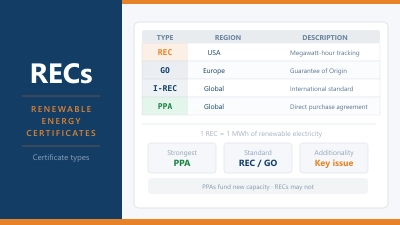
Renewable Energy Certificates (RECs) at least create a direct link between the host’s energy consumption and renewable generation. Carbon offsets don’t make that link. They address the emissions after the fact rather than at the source.
The distinction in practice:
- Direct renewable energy: the data centre physically runs on clean power
- RECs: clean power is funded in direct proportion to consumption
- Carbon offsets: emissions from fossil-fuel power are compensated elsewhere
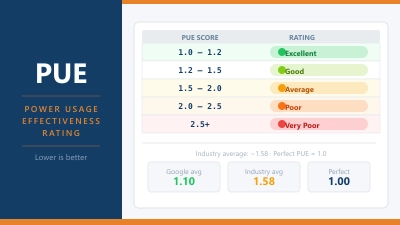
All three can be part of a credible sustainability programme. The strongest approach combines direct renewable energy or RECs with efficiency improvements (low PUE) and uses offsets only for residual emissions that can’t otherwise be addressed.
The 2026 Policy Change
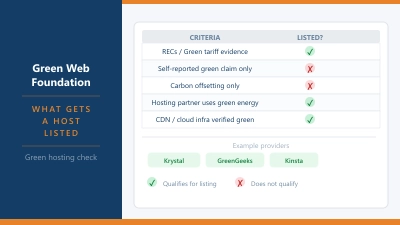
In January 2026, the Green Web Foundation updated their verification criteria to no longer accept carbon offsets as sufficient evidence for a fossil-free hosting claim.
Previously, a host could be listed in the directory on the basis of carbon offset programmes alone. Under the new criteria, a provider needs to demonstrate either direct renewable energy sourcing or verified REC or GO purchases to qualify. Carbon offsets may still be mentioned as a supplementary measure but are no longer the primary basis for listing.
This change reflects a growing consensus that carbon neutrality claims based solely on offsets don’t represent the same level of commitment as actually sourcing clean energy. A host whose only environmental claim is “we’re carbon neutral through offsets” no longer meets the GWF’s standard for fossil-free hosting.
Not sure if your current host is green? Our Green Host Checker gives you an instant answer.
Frequently Asked Questions
Is a carbon-neutral host actually green?
It depends on how they achieved carbon neutrality. If it’s through direct renewable energy or RECs with audited reporting, yes. If it’s primarily through carbon offsets, it’s a weaker claim. Offsets compensate for emissions rather than preventing them at the source.
What is the difference between carbon neutral and carbon negative?
Carbon neutral means a provider has offset all their emissions, achieving a net-zero carbon footprint. Carbon negative means they’ve removed more carbon than they’ve emitted. GreenGeeks’ 300% REC commitment is sometimes described as carbon negative in effect, since they fund three times the renewable energy they consume.
Do carbon offsets fund real projects?
Yes, when certified by recognised standards organisations. Gold Standard and Verified Carbon Standard are the most rigorous. Uncertified offset purchases are harder to evaluate, which is why the certifying body matters.
Why did the Green Web Foundation stop accepting offsets?
In January 2026 the foundation updated their criteria to require evidence of renewable energy sourcing or REC purchases rather than carbon offsets alone. The change reflects the view that offsets don’t address the energy source directly and represent a weaker commitment than the alternatives.
Should I choose a host with carbon offsets over one with no green programme?
Yes. A host actively funding verified carbon offset projects is making a financial commitment to reducing emissions. But if green credentials are a genuine priority, a host using RECs or direct renewable energy offers a more direct and verifiable commitment.