What Is a Domain Registrar?
The company you register your domain name through, can be separate from your web host.
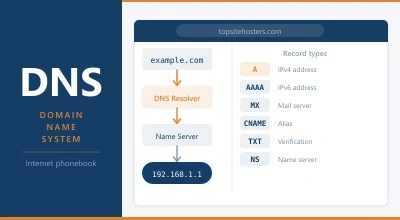
A domain registrar is a company accredited by ICANN (the Internet Corporation for Assigned Names and Numbers) to sell and manage domain name registrations. When you register a domain name, you’re doing it through a registrar. They handle the administrative record linking your name to that domain in the global DNS system.
You don’t own a domain name. You license it, typically in one-year increments, from a registrar. As long as you keep renewing, the domain is yours. Let it lapse and anyone else can register it.
How Domain Registration Works
The domain registration system has several layers, each with a specific role.
ICANN sits at the top. It’s the non-profit organisation that coordinates the global domain name system, accredits registrars, and delegates management of TLDs to registries.
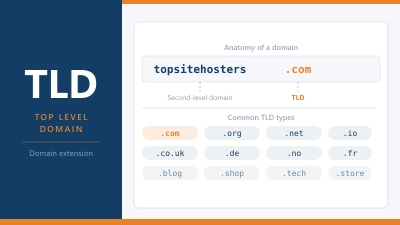
Registries manage specific TLDs. Verisign manages .com and .net. The Public Interest Registry manages .org. Each country’s national internet registry manages its ccTLD: Nominet manages .uk, DENIC manages .de. Registries maintain the authoritative database of all registered domains within their TLD.
Registrars are the companies you interact with as a customer. They’re accredited by ICANN and have agreements with registries to sell registrations. When you register a domain through Namecheap, Cloudflare, or GoDaddy, the registrar submits your registration to the relevant registry and maintains your contact and DNS records.
Resellers are companies that sell domains through a registrar’s platform without being accredited themselves. Many web hosts act as domain resellers. The registration still goes through an accredited registrar behind the scenes, but you’re managing it through the reseller’s interface.
When you register a domain, the registrar:
- Checks availability with the registry
- Submits your registration details
- Collects payment and manages renewal billing
- Provides a management interface for your DNS records, nameservers, and contact details
- Maintains your WHOIS record (or provides privacy protection to mask it)
Registrar vs Web Host
Your domain registrar and your web host do not need to be the same company. This is a distinction worth understanding because many beginners register their domain with their host, and this creates complications later.
What a registrar does: Manages your domain name registration, DNS records, and nameserver settings. That’s it.
What a web host does: Provides the server where your website’s files and database live.
When you buy hosting from a company like Hostinger or SiteGround and register a domain at the same time, you’re using that host as both your registrar and your hosting provider. This is convenient initially but creates a problem if you ever want to move hosts: changing hosting becomes more complicated when your domain is tangled up with your old host’s account.
The recommended approach for most people is to keep your domain registration separate from your hosting. Register your domain with a dedicated registrar like Namecheap, Porkbun, or Cloudflare Registrar. Point it at whatever host you choose by updating the nameservers. When you want to move hosts, you update the nameservers again. The domain stays put, only the hosting changes.
What to Look for in a Domain Registrar
Not all registrars are equal. These are the factors worth evaluating.
Transparent pricing: The registration price and the renewal price should be clearly stated before you commit. Some registrars advertise very low first-year prices and charge significantly more at renewal. Cloudflare Registrar sells domains at cost with no markup and no introductory discounts, the price you pay in year one is the price you pay at renewal. That kind of transparency is worth seeking out.
Free WHOIS privacy: When you register a domain, your contact details (name, address, email, phone number) are added to the public WHOIS database by default. WHOIS privacy (also called domain privacy or privacy protection) replaces your personal details with the registrar’s details in the public record. Most reputable registrars now include this for free. Some still charge extra for it, which is worth factoring in.
Domain management interface: You’ll need to update nameservers, manage DNS records, and set up redirects from time to time. A clear, well-designed control panel makes this straightforward. A confusing one makes simple tasks frustrating.
Two-factor authentication: Your domain registrar account is a high-value target. If someone gains access and transfers your domain out, recovery is difficult and slow. Choose a registrar that supports two-factor authentication and enable it immediately.
Transfer policies: If you ever want to move your domain to a different registrar, the process should be straightforward. Check the transfer-out policy before registering. Some registrars make transfers unnecessarily difficult.
Support quality: Domain issues are time-sensitive. A nameserver misconfiguration or an expired domain can take your site offline. Registrars with responsive, knowledgeable support are worth the slight premium they may charge.
Popular Domain Registrars
There are hundreds of accredited registrars. These are the ones most commonly recommended for reliability and value.
Cloudflare Registrar sells domains at registry cost with no markup. There’s no first-year discount and no renewal price increase. The interface is clean and integrated with Cloudflare’s DNS and CDN tools. The main limitation is that you need a Cloudflare account and it works best if you’re using Cloudflare for DNS anyway.
Namecheap is one of the most popular registrars among developers and site owners. Pricing is competitive, WHOIS privacy is free, the interface is solid, and support is generally responsive. They also offer hosting, email, and SSL certificates, though you don’t need to use those to register a domain.
Porkbun has become popular for its low prices and no-nonsense interface. They include free WHOIS privacy, free SSL certificates for the domain, and competitive renewal pricing. Good for registering and forgetting about.
GoDaddy is the largest registrar by domain count. It’s widely used but has a reputation for upselling and a complicated interface. Pricing can be competitive if you navigate the promotions carefully, but renewal prices are higher and WHOIS privacy is an add-on.
Google Domains was Google’s registrar product. Google sold it to Squarespace in 2023, which now operates it as Squarespace Domains. It remains a functional registrar for existing users, but the ownership change is worth noting if you were previously a Google Domains customer.
Domain Registration and Web Hosting
Most web hosts offer domain registration as part of their signup flow. It’s convenient, but it comes with trade-offs.
When your domain is registered through your host:
- Transferring to a new host is more complex. You need to either move the domain too or update nameservers, which requires accessing your old host’s account.
- If you cancel hosting, your domain management stays with that company, which can be awkward.
- Host registrar pricing is often higher than dedicated registrars for renewal.
On the other hand:
- Having everything in one place reduces the number of accounts to manage.
- Some hosts include a free domain for the first year, which can be good value if you’re just starting out.
- DNS is automatically configured when you register through your host, which removes one setup step.
For a single personal site where you don’t plan to switch hosts frequently, registering through your host is fine. For a business site or anyone building multiple sites, separate registrar and hosting accounts give you more flexibility and cleaner management.
Transferring a Domain
You can transfer a domain from one registrar to another. Common reasons include better pricing at renewal, a better management interface, consolidating domains in one place, or moving away from a host that managed your domain.
The transfer process follows a standard procedure:
- Unlock the domain at your current registrar (domains are locked by default to prevent unauthorized transfers)
- Obtain the EPP/auth code (a unique code the receiving registrar needs to verify you authorise the transfer)
- Initiate the transfer at the new registrar using the auth code
- Approve the transfer (usually via email to your registered contact)
- Wait for the transfer to complete, typically 5 to 7 days
ICANN rules prevent transfers within 60 days of initial registration or a previous transfer. If you’ve just registered a domain, you’ll need to wait before moving it.
Most TLDs transfer without disruption to your website. DNS continues to resolve during the transfer because the nameserver records move with the domain. The only time you’d see disruption is if you’re also changing nameservers during the transfer.
Domain Privacy and WHOIS
When you register a domain, ICANN requires registrars to collect your contact information: name, organisation, address, email, and phone number. This information is stored in the WHOIS database, which is publicly accessible.
Without privacy protection, anyone can look up your personal details by searching your domain in WHOIS. This creates risks: spam, phishing attempts, and in some cases targeted harassment.
WHOIS privacy (domain privacy protection) replaces your personal details in the public WHOIS record with the registrar’s proxy information. Your details are still on file with the registrar ( ICANN requires it) but they’re not publicly visible.
Since GDPR came into effect in 2018, registrars in Europe and those serving European customers have additional requirements around how they collect and display personal data. Many European registrars now redact personal information from public WHOIS records by default for EU registrants, which has reduced the urgency of privacy protection for European site owners. That said, having WHOIS privacy enabled is still a sensible precaution wherever you’re based.
Frequently Asked Questions
Do I need to buy a domain from my web host? No. You can register your domain anywhere and point it at any host by updating the nameservers. Keeping your domain and hosting with separate companies is generally the better approach for flexibility.
How long can I register a domain for? Most registrars allow registration periods of 1 to 10 years. Registering for multiple years locks in the current price and reduces the risk of forgetting to renew. Google has historically used multi-year registrations as a minor trust signal, though it’s not a significant ranking factor.
What happens when a domain expires? The domain enters a grace period (typically 0 to 45 days depending on the TLD) during which you can renew at the standard price. After that comes a redemption period (typically 30 days) where recovery is possible but usually costs significantly more. After the redemption period, the domain is released for public registration. Enable auto-renewal and keep payment details current.
Can I register a domain without a website? Yes. You can register a domain and leave it pointing at a placeholder page or nothing at all. People register domains to reserve names for future projects, protect their brand, or invest speculatively.
What is domain squatting? Domain squatting (or cybersquatting) is registering a domain that matches a brand name, trademark, or well-known entity with the intent of selling it back to the rightful owner for a profit. ICANN’s Uniform Domain-Name Dispute-Resolution Policy (UDRP) provides a mechanism for trademark holders to challenge and recover domains registered in bad faith.
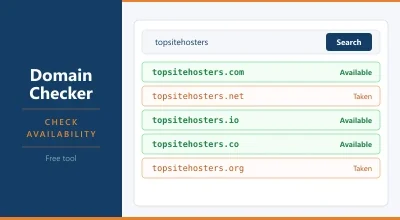
How do I know if a domain is available? Use our Domain Checker to search availability across multiple TLDs at once. Most registrar websites also have availability search tools, though they sometimes show sponsored results for premium domains alongside standard availability results.