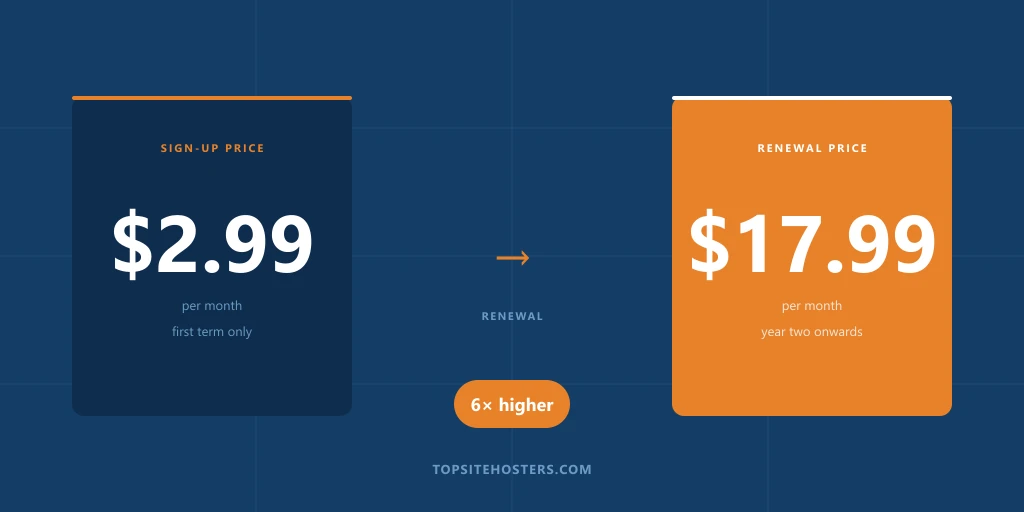
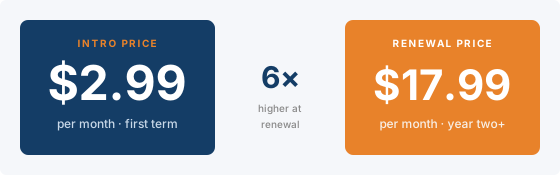
The renewal email arrives and you do a double take. You signed up at $2.99 a month. The invoice says $17.99. Same plan, same host, same everything. Just six times the price.
- The deal was never the real price
- Why hosts offer such low introductory prices
- The real costs that kick in at renewal
- Switching friction: why most people just pay it
- What you actually pay over three years: the numbers
- Hosts that handle this differently
- How to protect yourself at renewal time
- Questions about hosting renewal prices
- Final verdict
It’s not a mistake. It’s the business model. And once you understand how it actually works, the shock fades and the decision gets a lot easier to make.
This article explains why hosting renewal prices are so much higher, what legitimate costs are involved, and what you can do about it before your next billing date rolls around.
The deal was never the real price
That $2.99 figure you saw on the signup page? It was never what the hosting actually costs to run. It was what the company was willing to charge you to get you in the door.
This is called loss-leader pricing, and it’s been standard practice in web hosting for over a decade. A host sets the introductory price low enough to beat every competitor on comparison sites and affiliate lists, accepts a thin margin or an outright loss for the first year, and then prices the renewal at a rate that actually covers costs and generates profit.
The introductory price is a marketing expense. The renewal price is the real one.
That’s not necessarily deceptive. The renewal rate is disclosed, just not prominently. It appears in the fine print, in the FAQ, or in small text below the headline number. Whether that qualifies as transparent is a fair argument. But the mechanism itself is the same one used by mobile networks, gym memberships, insurance providers, and SaaS tools the world over. Hosting just tends to have some of the largest gaps between the two numbers.
Why hosts offer such low introductory prices
To understand the gap, it helps to follow the money from a host’s perspective.
Acquiring a new hosting customer is expensive. Most major hosts run affiliate programs that pay a flat fee for every referred signup. WP Engine pays affiliates $200 per sale. HostGator pays between $65 and $125. Kinsta runs into similar territory. When a review site or a YouTube channel sends you to Bluehost and you sign up, the host writes a cheque to that affiliate before you’ve paid a penny toward actual hosting costs.
Then add the other acquisition costs: paid search, display advertising, promotional deals, and the teams that manage all of it. A realistic customer acquisition cost for shared hosting can be substantial, especially when affiliate payouts are involved
Now set that against the revenue from year one. If you sign up at $2.99 a month on an annual plan, the host collects $35.88 from you in year one. After the affiliate payout alone, they’re already underwater. Infrastructure costs, support, and licensing come on top of that.
The business only works if you renew. That’s the calculation. Year one is the acquisition cost. Years two and three are where the margin lives. A customer who renews twice at $17.99 a month generates $431 across those two years, which more than covers what it cost to acquire them. A customer who cancels after year one represents a loss.
This is why hosts compete so aggressively on introductory numbers. The headline price is what gets you ranked on comparison sites. The renewal price is what keeps the lights on.
The real costs that kick in at renewal
It would be easy to frame this purely as a pricing trick, but the renewal rate does reflect genuine costs that the intro price simply doesn’t cover.
Running a shared hosting environment involves real ongoing expenses: server hardware and power, data centre space, bandwidth, security tooling, daily backups, and support staff. These don’t go away after year one. If anything, they increase over time as infrastructure ages, staff costs rise, and vendor pricing shifts.
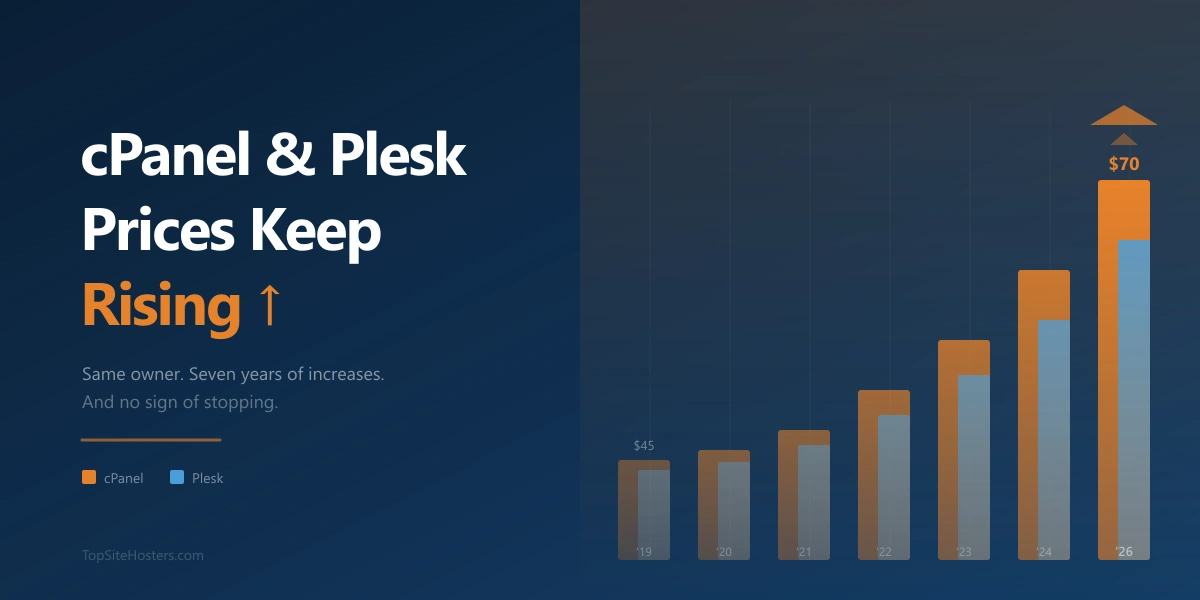
cPanel is a good example. cPanel is the control panel most shared hosting accounts run on. In 2019, cPanel restructured its licensing fees and moved to a per-account pricing model, causing immediate price increases across the industry. It did it again in 2024. Namecheap explicitly told customers in December 2024 that shared hosting renewals would increase in January 2025 because it could no longer absorb cPanel’s licensing costs. InMotion published a similar notice the same year.
These are real costs passed down the chain. The intro price was set before those increases took effect. The renewal price reflects the current reality.
SSL certificates, domain subsidies, and free migrations also factor in. When a host offers a “free domain” with your first year of hosting, they’re paying the registration cost themselves. A .com registration runs around $10 to $15 at cost. That’s built into the intro package and written off as part of customer acquisition. At renewal, the domain bills separately, typically at above-market rates: $19.99 a year is common for a .com renewed through a host, versus $12 to $14 at a standalone registrar.
Switching friction: why most people just pay it
Hosts aren’t just counting on the pricing model. They’re counting on inertia.
Once your site is live, migrating it feels like a big deal. You have to transfer files, update DNS records, move email accounts, test everything before flipping the switch, and sit through propagation delays. For a user without technical experience, running a small business site or a blog, that can feel risky enough to simply not bother.
Research cited in the hosting industry puts the figure at over 70% of customers accepting renewal prices without questioning them. That’s not because the higher price is good value. It’s because the hassle of moving feels worse than paying the extra $120 a year.
Hosts understand this. The harder migration seems, the more aggressive the renewal price can be. And the more bundled your account (domain registered through the host, email hosted there, SSL issued there), the more friction there is in leaving.
This isn’t a conspiracy. It’s just customer retention economics. But knowing this changes how you should think about your hosting setup from day one, not just at renewal time.
What you actually pay over three years: the numbers
The most useful thing you can do before signing up for any hosting plan is calculate the three-year total cost, not the monthly headline price.
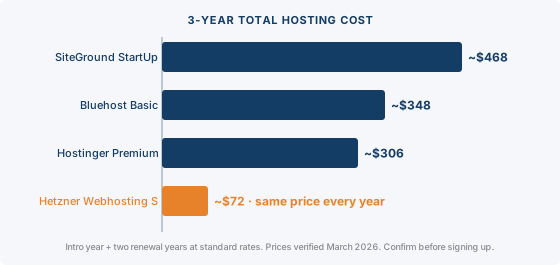
Here’s what that looks like for a few providers you’ll come across regularly. All figures are based on the annual billing cycle, the entry shared plan, with introductory pricing in year one and standard renewal pricing in years two and three.
| Provider | Year 1 (intro, annual) | Years 2 and 3 (renewal) | 3-year total |
|---|---|---|---|
| SiteGround StartUp | $35.88 ($2.99/mo) | $431.76 ($17.99/mo × 24) | ~$468 |
| Bluehost Basic | $59.88 ($4.99/mo) | $287.76 ($11.99/mo × 24) | ~$348 |
| Hostinger Premium | $41.88 ($3.49/mo) | $263.76 ($10.99/mo × 24) | ~$306 |
| Hetzner Webhosting S | $24.00 ($2.00/mo) | $48.00 ($2.00/mo × 24) | ~$72 |
Pricing verified March 2026. Renewal rates are subject to change. Always confirm the current renewal price on the provider’s pricing page before signing up.
The SiteGround number is the one that catches people out. The introductory price looks competitive at $2.99 a month. Over three years, you’re paying close to $470. That’s not necessarily bad: SiteGround runs on Google Cloud infrastructure and delivers strong performance. But it’s a very different conversation than “$2.99 a month.”
Hetzner is the outlier. The standard plan renews at the same price it was sold at, no promotional gap. The headline price is less exciting, but the three-year total is dramatically lower. Over a three-year period, you’d spend roughly $396 less with Hetzner than with SiteGround on entry plans. That gap closes if you value SiteGround’s support and performance, but it’s worth knowing what you’re comparing.
Worth knowing: some hosts reduce the renewal rate if you prepay for a longer initial term. Bluehost, for example, charges a slightly lower renewal rate on its 36-month plan than on the 12-month plan. You pay more upfront but less per cycle going forward. It’s worth running the maths on your specific plan if you expect to stay long term.
Hosts that handle this differently
Not every provider runs the same model. A handful are worth knowing about if renewal pricing is a deciding factor for you.
Hetzner is the clearest example. Their standard shared plan has maintained price lock guarantees for years: the price you sign up at is the price you renew at. No promotional gap. This makes the three-year cost calculation straightforward, and there are no surprises at the end of your first term. Read our full Hetzner review for more on what you get at that price.
DreamHost sits in the middle. Renewal increases are modest compared to the larger players, and they offer a monthly plan option that avoids big upfront commitments entirely. The monthly rate is higher than the annual cost per month, but it does give you flexibility to switch without losing a prepaid year.
Hostinger isn’t price-lock, but the renewal gap is narrower than most. At $10.99 a month to renew, it’s still an increase from an intro rate that can be under $2 (for the 4 year plan), but it’s less than half the renewal rate of SiteGround. Given that Hostinger also offers competitive performance, it tends to come out well on the three-year total calculation.
No host that runs a significant affiliate programme and competes heavily on introductory pricing will price renewals at cost. The economics don’t allow it. But the gap varies significantly, and it’s one of the more useful data points to check before you commit.
How to protect yourself at renewal time
The most effective thing you can do is set a calendar reminder the moment you sign up.
Mark a date 45 to 60 days before your renewal. That window gives you enough time to evaluate alternatives and complete a migration if you want one, without the pressure of a renewal that’s already processed.
At that point, run through this:
- Check the current renewal rate. It may have changed since you signed up. Log into your account portal or check your host’s renewal pricing page.
- Check competitor introductory rates. If a competitor is offering a similar plan at a low intro rate and includes free migration, the total cost of switching might be lower than one year of renewal at your current host.
- Ask for a loyalty discount. A significant number of customers who call or chat with their host before renewal do receive some kind of discount offer. Around 40 to 60% of renewal customers who ask get something. It costs you one support conversation.
- Consider timing a switch around Black Friday. The deepest discounts on hosting intro rates appear in November. If your renewal falls in September, paying two extra months at your current rate to align with a Black Friday deal on a new plan can result in meaningful savings over three years.
- Separate your domain from your hosting. Registering your domain at a standalone registrar like Namecheap or Porkbun, rather than through your host, makes switching hosts significantly easier. Your domain stays where it is. Only the files and database move.
Migration is less painful than it used to be. Most shared hosts now offer free migration as part of the signup process. You don’t need to do it yourself. You set up the new account, request a migration, and the new host handles the file transfer. DNS records are the main thing you update manually, and that takes about ten minutes once you know what to change.
Questions about hosting renewal prices
Is it legal for hosting companies to charge more at renewal than they advertised?
Yes. The renewal rate is disclosed in the terms of service, usually with the note that the introductory price applies to the first billing period only. Whether it’s prominently disclosed is debatable, but it’s not hidden. Regulators in the US and EU generally require that renewal pricing be accessible before purchase, not that it be displayed with the same prominence as the headline price.
Which hosting providers have the lowest renewal prices?
Hetzner is the standout: their price lock policy means you renew at the same rate you signed up at. Among hosts with a promotional gap, Hostinger and IONOS tend to renew at more moderate rates than SiteGround or the upper plans on DreamHost. The honest answer is to compare three-year totals rather than monthly intro prices. The table earlier in this article is a starting point.
Can I negotiate a lower renewal price with my host?
Often, yes. Contact support before your renewal date, not after, and mention that you’re evaluating alternatives. Many hosting providers have discretionary discount codes for retention. This works better with larger hosts where a support agent has the authority to apply a discount code than with smaller operators. It’s worth a five minute live chat conversation before you do anything else.
Is it worth switching hosts every year just to get the intro price?
It depends on your situation. If your site is small and you’re comfortable with DNS and basic migrations, it’s genuinely viable. The migration process is straightforward with free migration offers from most hosts. The main cost is your time. For a simple blog or portfolio, an hour every 12 to 24 months in exchange for saving $100+ a year is a reasonable trade. For a business site with complex email setup, WooCommerce, and custom configurations, the risk and time cost usually make it not worth it unless the renewal gap is very large.
How do I calculate the true three-year cost of a hosting plan?
Take the introductory monthly rate and multiply it by 12 for year one. Then take the renewal monthly rate and multiply it by 24 for years two and three. Add both figures. Also add the domain renewal cost for years two and three if the domain is registered through the host. That gives you a realistic picture of what you’ll actually spend.
Final verdict
Hosting renewal pricing is not a scam. It’s a business model, and it’s a rational one from the provider’s side. They invest in acquiring you, accept a loss in year one, and rely on renewal revenue to make the economics work. The affiliate commissions alone, at $100 to $200 per signup, make clear that pricing in year one was never meant to cover the cost of service.
What makes it frustrating is that the gap between the headline price and the renewal price is often enormous, and it’s buried rather than prominent. The gap at SiteGround is roughly 6x. At IONOS, it can be 16x on the cheapest plan. That’s not a minor adjustment. It’s a fundamentally different price.
The best defence is to calculate the three-year total before you sign up, set a reminder before renewal, and treat migration as a normal part of your hosting lifecycle rather than something to dread. The infrastructure to help you move exists. Most hosts include free migration to win your business. Use it if the numbers don’t add up at renewal time.
If you want to avoid the uncertainty entirely, Hetzner’s price lock is the most transparent model in shared hosting. You pay slightly more upfront, but the three-year total tells a different story.