A lot of hosting companies say they’re green. Some of them slap a leaf icon on their homepage, mention the word “sustainability” once, and call it a day. Others are quietly running their servers on hydropower and publishing audited reports nobody reads.
The difference matters. Data centres consume roughly 2% of global electricity, which puts them in the same league as the airline industry for carbon output. If you run a website, you’re part of that footprint whether you think about it or not.
So which hosts are actually doing something meaningful? And how do you tell the real ones from the marketing? That’s what this guide is for. We’ll break down how green hosting works, give you a framework to evaluate any host’s claims, and cover specific providers, including several we’ve already reviewed on TopSiteHosters.
What Makes Web Hosting “Green”?
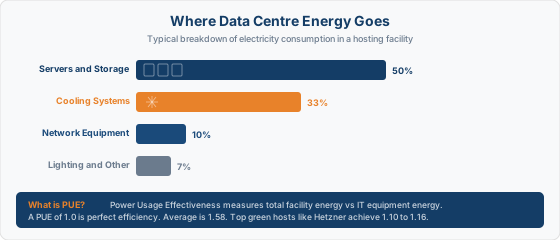
Every website lives on a server. That server sits in a data centre. That data centre runs 24 hours a day, every day, consuming electricity to power the hardware and cool it down so it doesn’t overheat.
Most of that electricity still comes from fossil fuels. The result is a significant carbon footprint that most people never think about because the internet feels invisible. But it isn’t. Those servers are physical machines in physical buildings drawing real power from a real grid.
Green web hosting is any approach that reduces or offsets that environmental impact. Some hosts run their data centres on renewable energy. Others buy certificates to fund renewable production elsewhere. A few just buy carbon credits and call it done.
The problem is that these approaches aren’t equal. And most “best green hosting” lists treat them as if they are. They’re not.
The Three Tiers of Green Hosting
This is the part most articles skip over. Not all green hosting is created equal. Think of it as three distinct tiers, each with a different level of real impact.
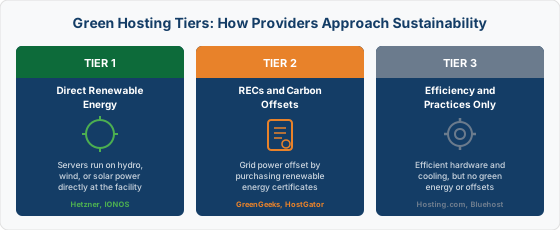
Tier 1: Direct Renewable Energy
This is the gold standard. The data centre physically runs on renewable power: hydroelectric, wind, solar, or geothermal. The electricity flowing into the building comes from a verified clean source. No middlemen. No certificates balancing things out on paper.
A good example is Hetzner. Their German data centres run on hydropower supplied by Energiedienst AG, a certified green energy provider. In Finland, they use wind and hydropower from Oomi Oy. The electricity actually powering the servers is renewable.
IONOS takes a similar approach. Their US data centre runs on wind power, and their European facilities use 100% renewable electricity with priority given to local and regional suppliers. Where they can’t source renewables directly, they use carbon offsets to cover the gap, but the core infrastructure runs clean.
Krystal, a UK host, powers all its data centres with 100% renewable electricity from Ecotricity. Their flagship facility achieves a PUE (Power Usage Effectiveness) of 1.05, one of the lowest in the industry. For context, the global average is around 1.56. Lower is better, and 1.0 would be theoretically perfect.
Tier 2: Renewable Energy Certificates (RECs)
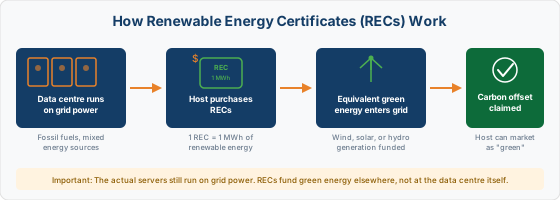
This is where most mainstream hosts sit. The data centre still pulls electricity from the regular grid, which may include fossil fuels. But the host purchases Renewable Energy Certificates, sometimes called Guarantees of Origin (GOs) in Europe, to match their energy consumption.
What does that mean in practice? For every unit of energy the data centre uses, the host funds the production of an equivalent amount of renewable energy somewhere else. The actual electrons flowing into the servers might come from a coal plant, but the financial support goes to a wind farm or solar installation.
It’s real. It’s legitimate. It does fund renewable infrastructure. But it’s not the same as running directly on clean power. The data centre’s grid connection hasn’t changed.
GreenGeeks is probably the most well known host in this tier. They’ve partnered with the Bonneville Environmental Foundation since 2008 and purchase RECs equal to 300% of their energy consumption. The US Environmental Protection Agency has recognized them as a Green Power Partner since 2009. They also plant a tree for every hosting account through their One Tree Planted partnership.
Hostinger reached 100% renewable energy matching across all data centres in 2024, using a mix of direct contracts with renewable suppliers and purchased RECs, GOs, and International RECs depending on the region. They publish annual sustainability reports following GRI standards, and their Scope 2 emissions dropped from 1,522 tonnes of CO2 in 2023 to just 15 in 2024. That’s a real, audited number, not a marketing claim.
SiteGround runs on Google Cloud infrastructure, where Google matches 100% of its energy consumption with renewable energy purchases. SiteGround’s own headquarters in Sofia are LEED Gold certified, and they’ve added company e-bikes, electric cars, and charging stations. Kinsta also runs on Google Cloud with an added Cloudflare integration, so the same renewable matching applies.
Tier 3: Carbon Offsets Only
This is the weakest tier. The host doesn’t change its energy source at all. Instead, it buys carbon credits (often funding tree planting or reforestation projects) to “neutralize” its emissions on paper.
Carbon offsets have their place. But they don’t reduce the fossil fuel energy actually being used. And their effectiveness has been questioned. The Green Web Foundation announced in January 2026 that they will no longer accept carbon offsets as a way for providers to claim they’re fossil free. That’s a significant shift from the most respected independent verifier in the hosting space.
Hosts that rely mainly on offsets include HostGator, which has purchased RECs through 3Degrees Inc. since 2010 to offset 130% of its energy consumption. This is a Tier 2 approach. The energy powering HostGator’s data centres still comes from the regular grid.
The point isn’t that offsets are worthless. The point is that if a host’s only green credential is buying carbon credits, you should know that’s the least impactful approach available.
How to Spot Greenwashing
Some hosts market themselves as green without doing much at all. Here’s how to tell the difference.
No published sustainability report. Hosts with genuine commitments publish data. Hostinger publishes a full annual report with GRI references. Hetzner names its energy suppliers. If a host says it cares about the environment but provides zero specifics, that’s a red flag.
No PUE data. Power Usage Effectiveness measures how efficiently a data centre uses energy. A PUE of 1.2 is excellent. A PUE of 2.0 means half the energy is wasted on cooling and overhead. If a host doesn’t mention PUE at all, they probably haven’t measured it, or don’t want to share it.
No third-party verification. The Green Web Foundation maintains a free, independent directory of verified green hosting providers. Any host can submit evidence and get listed. If a host isn’t in the directory, ask why. You can check any website at the Green Web Foundation’s Green Web Check tool. Just enter a URL and it tells you whether the site runs on green energy.
Vague language with no specifics. “We care about the planet” means nothing without details. Look for named energy suppliers, specific certificate types (RECs, GOs, I-RECs), data centre locations, and dates. If the greenest thing on their website is a stock photo of a forest, move on.
Green claims only apply to offices, not data centres. Some hosts tout green offices or remote work policies while the data centres, where the vast majority of energy consumption happens, still run on fossil fuels. The data centre is what matters. Everything else is secondary.
Which Hosts Are Actually Green?
Here’s how the hosts we’ve reviewed stack up, ranked by the strength of their green credentials. We’ve included a few we haven’t reviewed yet that are worth knowing about.
| Host | Green Tier | Approach | GWF Verified | TSH Review |
|---|---|---|---|---|
| Hetzner | Tier 1 | Direct hydro (DE), wind/hydro (FI) | Yes | Yes |
| IONOS | Tier 1 | Direct wind (US), renewables (EU) | Yes | Yes |
| Krystal | Tier 1 | 100% renewable via Ecotricity (UK) | Yes | Not yet |
| GreenGeeks | Tier 2 | 300% RECs, EPA Green Power Partner | Yes | Yes |
| Hostinger | Tier 2 | 100% RE match, annual GRI reports | Yes | Yes |
| SiteGround | Tier 2 | Via Google Cloud 100% RE match | Yes | Yes |
| Kinsta | Tier 2 | Via Google Cloud + Cloudflare | Via Google | Yes |
| DreamHost | Tier 2 | Carbon neutral since 2008, renewables | Yes | Not yet |
| Bluehost | None | No public green policy | No | Yes |
| Rocket.net | None | No sustainability page | No | Yes |
Hetzner: Direct Hydropower and Wind
Hetzner doesn’t market itself as a “green host.” It just quietly runs on clean energy and gets on with it.
Their German data centre parks use hydropower from Energiedienst AG. In Finland, they use wind and hydropower from Oomi Oy. Both are verified, named suppliers, not vague claims about “renewable sources.” Hetzner is listed in the Green Web Foundation’s directory and has been for years.
For European users, particularly those who also care about GDPR compliance and data sovereignty, Hetzner is hard to beat on both the sustainability and practical hosting fronts.
IONOS: Renewable Energy Across Two Continents
IONOS runs its US data centre entirely on wind power. In Europe, all electricity comes from renewable sources, with priority given to local suppliers. Where small gaps remain (like backup diesel generators), they use carbon offsets.
They also run an equipment recycling programme and use AI to optimize energy usage across their infrastructure. IONOS doesn’t get enough credit for how far they’ve gone with sustainability, partly because they don’t shout about it the way some competitors do.
GreenGeeks: The Dedicated Green Brand
GreenGeeks built its entire identity around sustainability. Since 2008, they’ve purchased 300% of their energy consumption in RECs through the Bonneville Environmental Foundation. That means for every unit of energy they use, three units of renewable energy get funded.
They’re an EPA Green Power Partner, they plant a tree per hosting account, and they’ve maintained this commitment for over 15 years. If your primary decision factor is choosing the most visibly committed green host, GreenGeeks makes a strong case.
The honest caveat: this is Tier 2, not Tier 1. The data centres don’t physically run on renewable energy. The RECs fund it elsewhere. That’s still a significant contribution, just be clear about what you’re getting.
Hostinger: The Fastest Improver
Hostinger has made the most dramatic progress of any host on this list. In 2022, only 35% of their data centre energy came from renewables. By 2024, they reached 100% through a combination of direct renewable contracts and certificates.
Their annual sustainability reports follow GRI standards and include real numbers: PUE averages, Scope 1 and 2 emissions, and specific data centre breakdowns. The 2024 report showed Scope 2 market-based emissions dropping from 1,522 tonnes to just 15. New data centres must operate on 100% renewable electricity as a condition of the contract.
All Hostinger server IPs are now listed as renewable in the Green Web Foundation’s database. For a host at this price point, the sustainability credentials are genuinely impressive.
SiteGround: Green by Infrastructure
SiteGround moved its infrastructure to Google Cloud in 2020. Google matches 100% of its energy consumption with renewable energy purchases, which makes SiteGround green by association.
Beyond the infrastructure, SiteGround’s headquarters in Sofia are built to LEED Gold standards. They offer e-bikes and electric cars to employees, ban single use plastics in the office, and plant a tree for every order. Their Ultrafast PHP also reduces server resource usage, which means less energy consumed per website.
The limitation: SiteGround’s green credentials are inherited from Google, not built independently. That’s not a knock. Google’s renewable commitment is massive. But SiteGround itself doesn’t publish a standalone sustainability report with hosting-specific data.
Kinsta: Premium and Clean
Kinsta runs entirely on Google Cloud Platform with Cloudflare integration. That gives it the same 100% renewable energy matching as SiteGround, plus Cloudflare’s own commitment to ARM-based servers that use 50% less power.
Kinsta is a premium managed WordPress host, so the pricing starts higher (around $29/month). But if you’re already in the market for managed hosting, the green credentials come baked in at no extra cost.
Krystal: The UK Standout (No TSH Review Yet)
Krystal is a UK host that powers all its data centres with 100% renewable electricity from Ecotricity. Their flagship data centre achieves a PUE of 1.05, which is among the lowest in the world. They also plant trees monthly for each customer through a partnership with Ecologi.
We haven’t reviewed Krystal yet, but it’s on our list. If you’re based in the UK and want a host that runs directly on renewable energy, not certificates, Krystal is worth a look.
DreamHost: Quietly Consistent (No TSH Review Yet)
DreamHost has been carbon neutral since 2008, which makes them one of the longest-standing green hosts in the industry. They use renewable energy partnerships, energy-efficient cooling, and encourage remote work for employees.
They don’t market the green angle aggressively, which is actually a point in their favour. The focus is on running a good hosting service that happens to be sustainable. We’ll be adding a full DreamHost review in the future.
What About Hosts That Aren’t Green?
Not every host has a sustainability programme, and that’s worth knowing.
Bluehost is one of the biggest names in hosting, but we couldn’t find a dedicated sustainability page, green energy commitment, or published environmental report. They’re part of Newfold Digital, which also doesn’t publish group-wide sustainability data.
Rocket.net is a solid managed WordPress host, but there’s no public information about their environmental practices either. No sustainability page, no energy claims, no Green Web Foundation listing.
This doesn’t make them bad hosts. They might deliver great performance, strong support, and fair pricing. But if sustainability is part of your decision, you should know that these providers haven’t publicly committed to it.
Does Green Hosting Cost More?
This is one of the most common concerns, and the answer is simpler than you’d expect: not really.
Green shared hosting starts from around $2 to $5 per month. GreenGeeks’ Lite plan starts at $2.95/month. Hostinger’s Premium plan starts at $2.59/month. IONOS starts even lower. These prices are competitive with, and often cheaper than, hosts with no green credentials at all.
At the managed end, Kinsta starts at around $29/month, but you’re paying for managed WordPress hosting, not for the green component. The sustainability is included in the standard price.
The idea that green hosting costs more made sense ten years ago when renewable energy was expensive and niche. It doesn’t hold up anymore. Renewable infrastructure has become cost competitive, and hosts using it benefit from newer, more efficient data centres. In many cases, you’re getting better hardware because the facilities are newer.
You can estimate your hosting costs using our hosting cost calculator to compare options.
Frequently Asked Questions
What is green web hosting?
Green web hosting means the provider takes steps to reduce or offset the environmental impact of running its servers. This can range from powering data centres with renewable energy directly, to purchasing energy certificates, to buying carbon offsets. The quality of the approach varies widely between providers.
How do I check if my host uses renewable energy?
The easiest way is the Green Web Foundation’s Green Web Check tool. Enter any website URL and it tells you whether the site is hosted on verified green infrastructure. You can also check their directory for a list of verified providers by country.
What is the difference between RECs and direct renewable energy?
Direct renewable energy means the data centre physically runs on clean power like hydro, wind, or solar. RECs (Renewable Energy Certificates) mean the host buys certificates that fund renewable energy production elsewhere, while the data centre may still draw from a mixed grid. Both support renewables. Direct energy is stronger.
Does green hosting affect website speed or uptime?
No. Most green hosts use modern, efficient infrastructure that performs as well as or better than traditional alternatives. Providers like Hetzner, SiteGround, and Kinsta consistently rank among the fastest hosts regardless of the green label. Newer data centres built for efficiency tend to deliver better performance, not worse.
What is PUE and why does it matter?
PUE stands for Power Usage Effectiveness. It measures how efficiently a data centre uses energy. A PUE of 1.0 would mean all power goes directly to computing. A PUE of 2.0 means half the energy is lost to cooling and overhead. The global average is around 1.56. The best green data centres achieve 1.2 or lower. It’s one of the most reliable ways to evaluate how seriously a host takes energy efficiency.
Final Verdict
If sustainability matters to you, the good news is that you don’t have to compromise on quality or pay a premium to get it.
For the strongest green credentials at a budget price, Hetzner and IONOS stand out. Both run on direct renewable energy, not certificates, and both are verified by the Green Web Foundation. If you’re in Europe, these are the obvious picks.
GreenGeeks is the host that’s built its entire brand around sustainability. The 300% REC commitment is the most aggressive in the industry, and they’ve maintained it for over 15 years. If choosing the most visibly committed green host matters to you, that’s where to look.
Hostinger deserves recognition for the speed of its improvement. Going from 35% renewable to 100% in two years, while publishing audited reports, is something most competitors haven’t attempted. At its price point, it’s hard to argue against.
For managed WordPress hosting, Kinsta and SiteGround both run on Google Cloud’s 100% renewable-matched infrastructure. You’re getting green hosting as standard, no compromises on speed.
And if you’re in the UK, keep an eye on Krystal. Direct renewable energy, one of the best PUE scores in the world, and genuinely transparent about their practices.
The bottom line: check the Green Web Foundation’s directory, look for named energy suppliers and published PUE data, and be sceptical of any host that says “we’re green” without showing you the receipts.